
Daniel Martin Rincón: Mientras la pierna izquierda sirve como punto de apoyo, el pie derecho se levanta del suelo: los escondites ambulantes (While the left leg acts as a support, the right foot is lifted off the ground: the Wandering Hideouts)
Daniel makes hideouts you have to carry: not shelters you arrive at and settle into, but things you put over yourself, things that cover, things you then have to move. The starting image is not in the gallery. It is out on the street: a small body moving beneath a volume that covers it and extends beyond it. Everything else comes from there. Everything here covers something, and covering is not hiding. It is another way of showing up. Nobody in costume disappears; they get noticed.
For something to move, something else has to hold still. Rest and movement do not split the room in two. They are one form. The show runs on pairs that refuse to fight: party and wake, rest and transit, the serious and the joke. Nothing will hold still long enough for you to pry it open and check the mechanism. You are still reaching for it when it has already gone, and you see it as it goes by, and you do not get to take it apart.
-
A small body moves beneath a volume that covers it and extends beyond it. The scene plays out on streets everywhere, so ordinary that almost nobody registers it. Daniel treats it as a problem of form rather than as an anecdote, and the exhibition takes its governing idea from there: balance is not symmetry, and a hideout is not a place that waits for you. It is something you have to carry.
A portable hideout requires that something hold still so that something else can move. That is why rest and movement do not split the room in two. They are one form seen at two moments, and that form will not hold still long enough to be opened up and studied. Stopping, cutting, hyperspecifying: habits of capture. And what moves can only be experienced. So the exhibition works as a theatrical illusion, and it is worth saying plainly: what appears to be happening is not quite happening. You can hide in complete silence or inside a din so loud that it drowns everything out, and both work equally well. Covering here is not flight: it is another way of appearing.
If transit is the condition, what covers weighs as much as what is covered. Invernadero para una nube diseccionada en 17 (2026) assembles an old scrap chassis and a wooden structure, wraps it all in plastic, and encloses a drawing worked in layers: a red cloud already cut apart. If drawing is the beginning of every sculpture, that proposition turns literal here: the sculpture takes the drawing in and carries it.
The plastic covers and lets you see through it at the same time, and in doing so it produces wrinkles, tensions, a blurred texture. Wrapping is not an addition: it is the procedure. The material is poor on purpose and arrives with mileage, worn by use and by disuse. The chassis, from a car that has done its rolling and will not roll again, rejects the body. Its angular hardness throws the softness of everything else into relief.
The cloud comes back stacked in Las mil y una noches de la clasificación universal (2023), where a hotel room's repose is piled to the ceiling as one more thing to carry. And there is the joke, which is also entirely serious: a cloud is precisely what will not be cut or catalogued. Art borrows the trade of dissection, the inventory asks for its cloud, and the cloud slips through its fingers.
The same transit turns one object into another. Primero es un ruido que produce otro ruido (2023) begins with a mattress that once held intimacy and rest. A waste picker opens it, pulls the springs out, and keeps the cover, which first serves as a sack for hauling cardboard and here ends up hanging like a tapestry.
The change hits hard and weighs nothing: the force is in the image, which lands all at once, and the lightness is literal, because the emptied cover moves with no effort at all. Hanging, it keeps the scale of a bed and the stain left by the body that slept on it. Cheap imitations of Mickey and Minnie surface between the woven stripes, popular culture working its way into even the most ordinary objects. And the seams joining the panels do exactly what a line does: they separate, they join, they draw on the cloth.
If a seam already draws, the step to the drawings themselves is a short one. Drawing is Daniel's first craft, and paper holds word and image at once. La desordenada codicia de los bienes ajenos (2014 to the present) grows by overlay, with drawings that face and overlap one another, loose strokes, and bodies warped to give the sensation of movement. The figures do not keep a single contour, and that plasmaticity is part of how the work is built¹: the story stays in frames, the process stays open, the scenes point in many directions without telling one story.
The title comes from Carlos García's picaresque novel (Paris, 1619) and names the method without the slightest embarrassment: steal other people's images, put them back together in another direction, make something appear out of nothing without asking anyone's permission. Parecen una familia pero en realidá son una banda de atracadores (2026) says it outright: what reads as kinship turns out to be plunder.
Those drawings have a precedent the exhibition uses as a counterexample. In the Silly Symphonies, the march advances to a meter calculated to keep the motion from looking mechanical. But the march is really repeating itself, and the moment the parade ends, the characters line up for work. That is the official feast: a celebration on a loop that trains everyone to be useful and returns them to their post.
What happens in the gallery is the other feast, the carnival, which stands up to that order. It is a transitory liberation, a provisional abolition of hierarchies, privileges, rules, and taboos. It refuses perpetuation and regulation of every kind, and it puts things that rarely share a place into unfamiliar relation: scrap and flowers, waste and needlework. That feast cannot be watched from outside: it cancels the distance between those who look and those who act, and leaves them sharing one space of familiarity. The illusion the exhibition lives on is not the illusion of the stage: there is no stage here and therefore no spectacle. What opens up is not a conclusion but a future that is still incomplete. The liberation is transitory by definition and does not aim to last, but its effect on those who were there does not fade with it: the mood is catching, and it keeps working once the feast is over.²
Two covered bodies hold that other feast. Se identifica simbólicamente con pájaros (2026) lies on the floor in a plastic suit with horns built from scrap, a full costume that conceals absolutely nothing. That is the point. Covering something deliberately draws attention rather than deflecting it, and camouflage exists only while someone is looking for what is hidden. Between hiding and being found there is a circle, and a costume discloses another part more than it conceals. Identity is not a flag; it is a suit you put on.
The second body does not cover itself. Something else covers it. That work, la eliminación inmediata e indefinida (2026), is the exhibition's point of absolute rest. Seated, he stays completely still. A fake vine already dead climbs over him, takes on his shape, and nearly turns the torso into a mountain. None of that would happen if he moved. This is the work that makes visible what the exhibition has been saying from the start: without something held still, nothing moves. His stillness is not abandonment or surrender, and the running shoes he keeps on confirm as much. Nobody here is renouncing daily life: a body stops so the rest can happen.
Covering a body and covering a table are the same gesture, and a torso turned into a mountain shares its geographic architecture with a table that has been set. Monumento instantáneo (2025) spreads a handmade cloth and everlasting flowers made of plastic over a table meant for a living room. It looks like a wake and at the same time keeps a glint of play, because the tragic does not cancel the party and laughter does not exclude seriousness but completes it.
Domestic objects carry a hegemonic order, beginning with the head of the table and its hierarchy. The handmade cloth reinforces that order and at the same time takes it into the street. Carrying a table through a downpour is enough to turn the table into a roof. That garden does not need taming either: weeds bloom too, and beauty fits inside a crack. Lilo (2026) brings the same covering into the middle of the party: a piñata no one strikes, an accidental altar where desire stays put and the blow never comes. In The Thief's Journal, Genet reclaims bad values as a language of their own. Here that language lets celebration and hiding happen in the same gesture.
None of this advances in a straight line, and the video's edit makes the point with a cut. Defensa del agua en tierra (2023) sets two vertical shots against a horizontal one: a boat at sea and another on the beach, opposites that coexist until they become the same image. It is Fontanesi's procedure: juxtaposition manufactures a third scene that never existed. The exhibition is organized the same way, in curves and diagonals, narrating mutation rather than sequence, with the air of something already on its way out.
The title promises no more than the description of a step open in many directions. Something immobile is always required for something else to move. The hideout does not wait in one place: it has to be carried. And once seen, the form is already something else.
Notes
¹ The term plasmaticity comes from Sergei Eisenstein's writings on animation.
² The account of carnival against the official feast follows Mikhail Bakhtin.
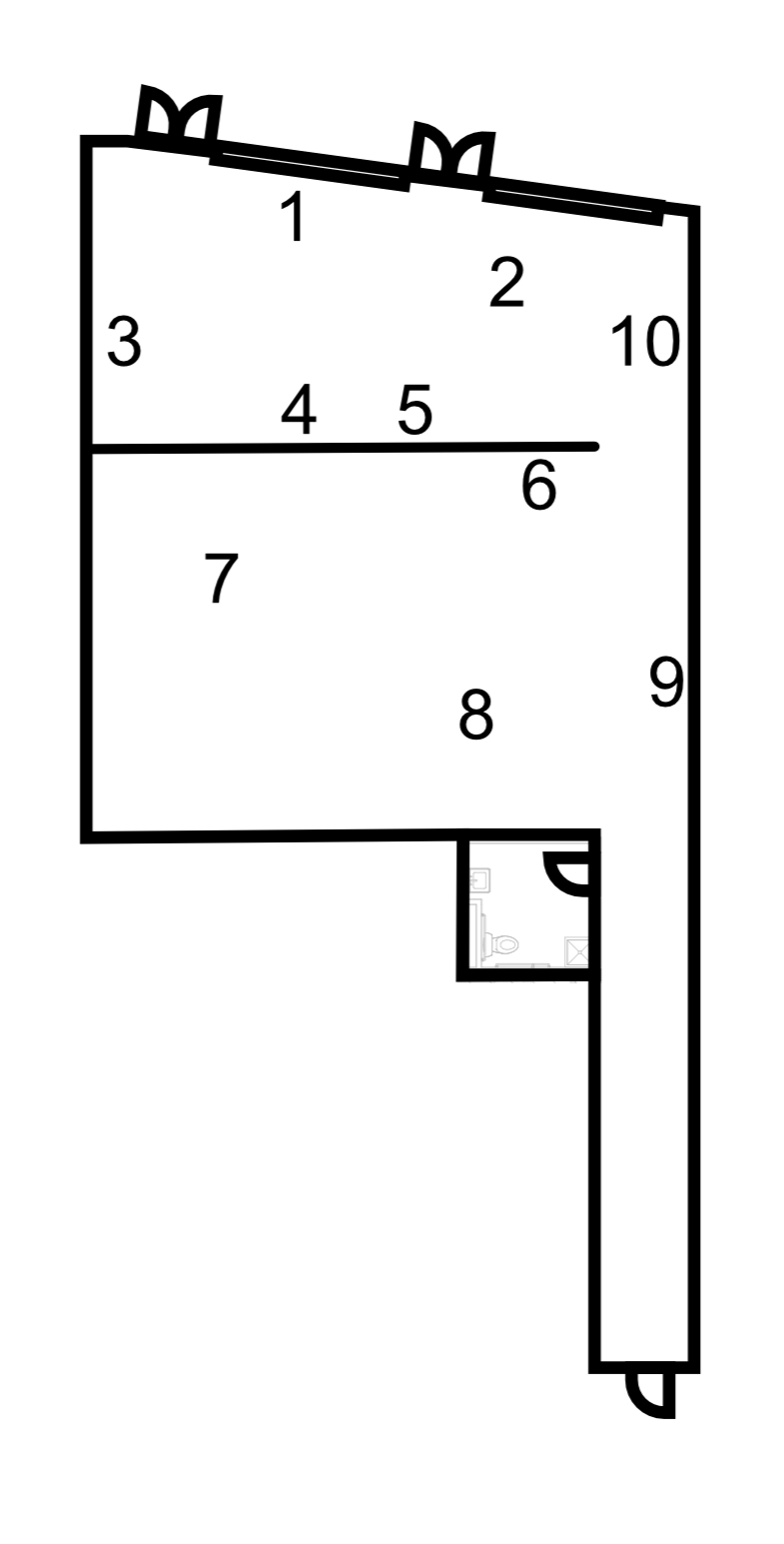
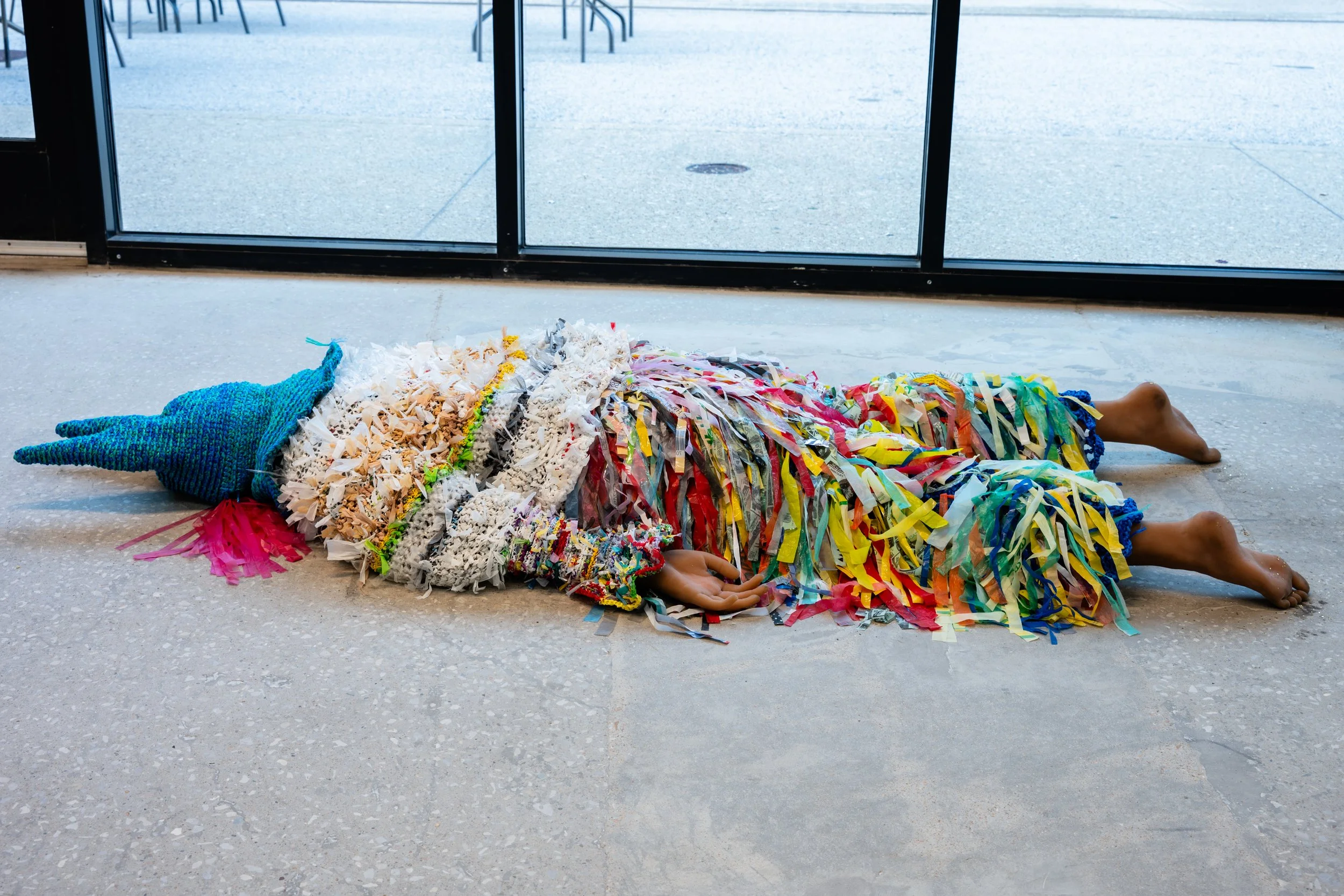
1: Se identifica simbólicamente con pájaros / Technique: Leisure / Year: 2026 / Size: variable
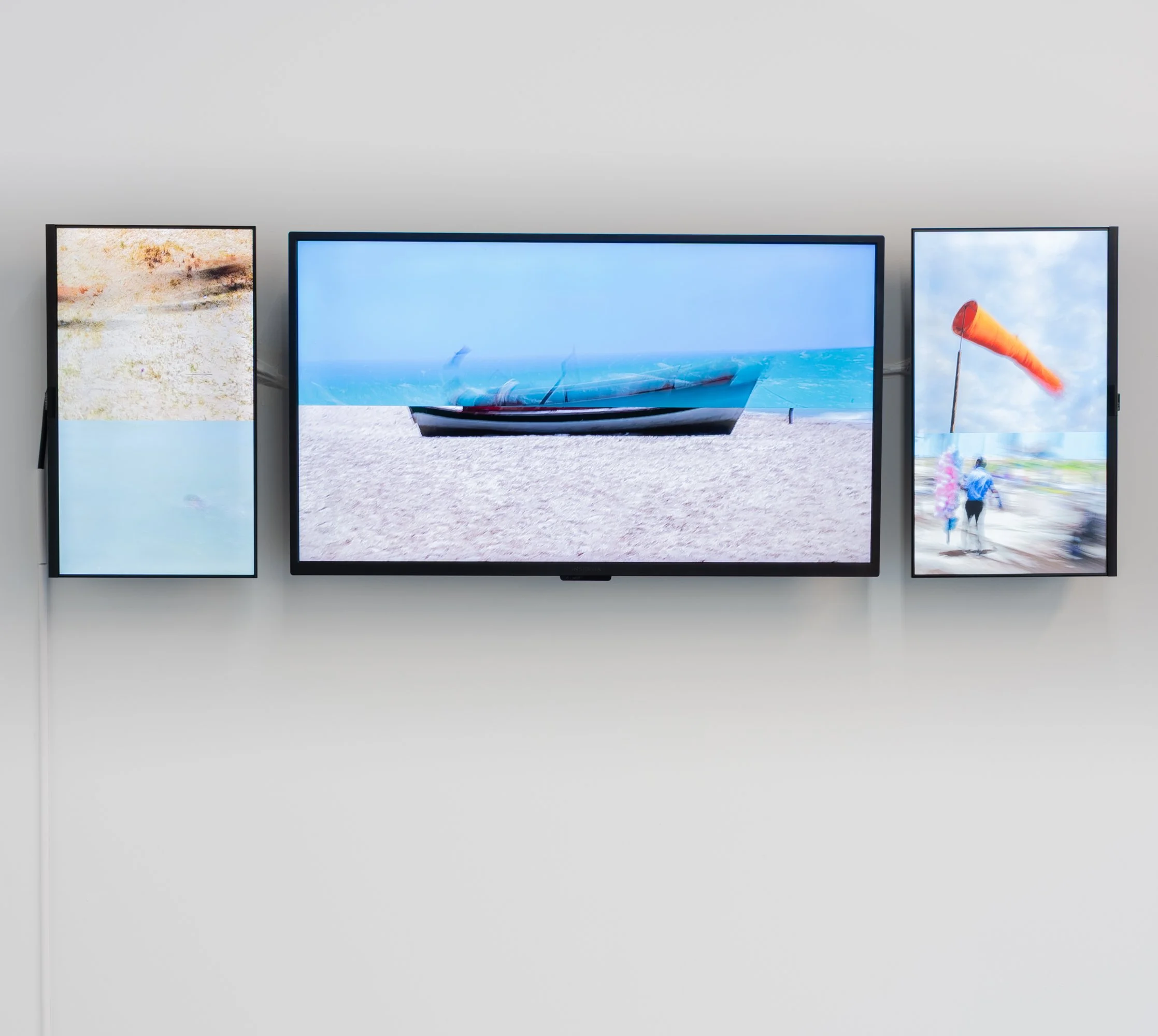
3: Defensa del agua en tierra / Year: 2023 / Medium: Video / Technique: Five rather short films / Duration: 48 seconds
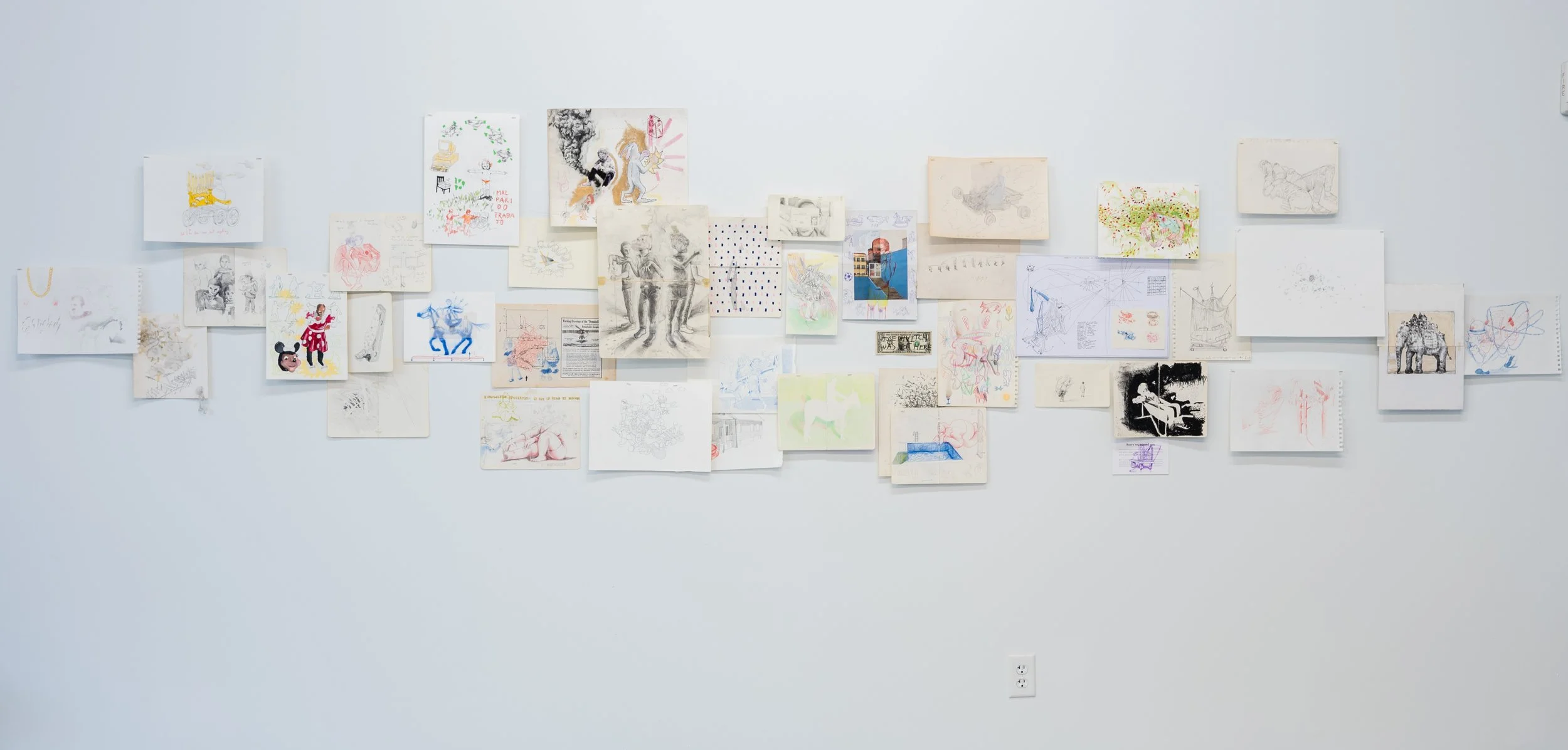
4: La desordenada codicia de los bienes ajenos / Technique: Möbius staircase / Year: 2014 to the present / Size: variable
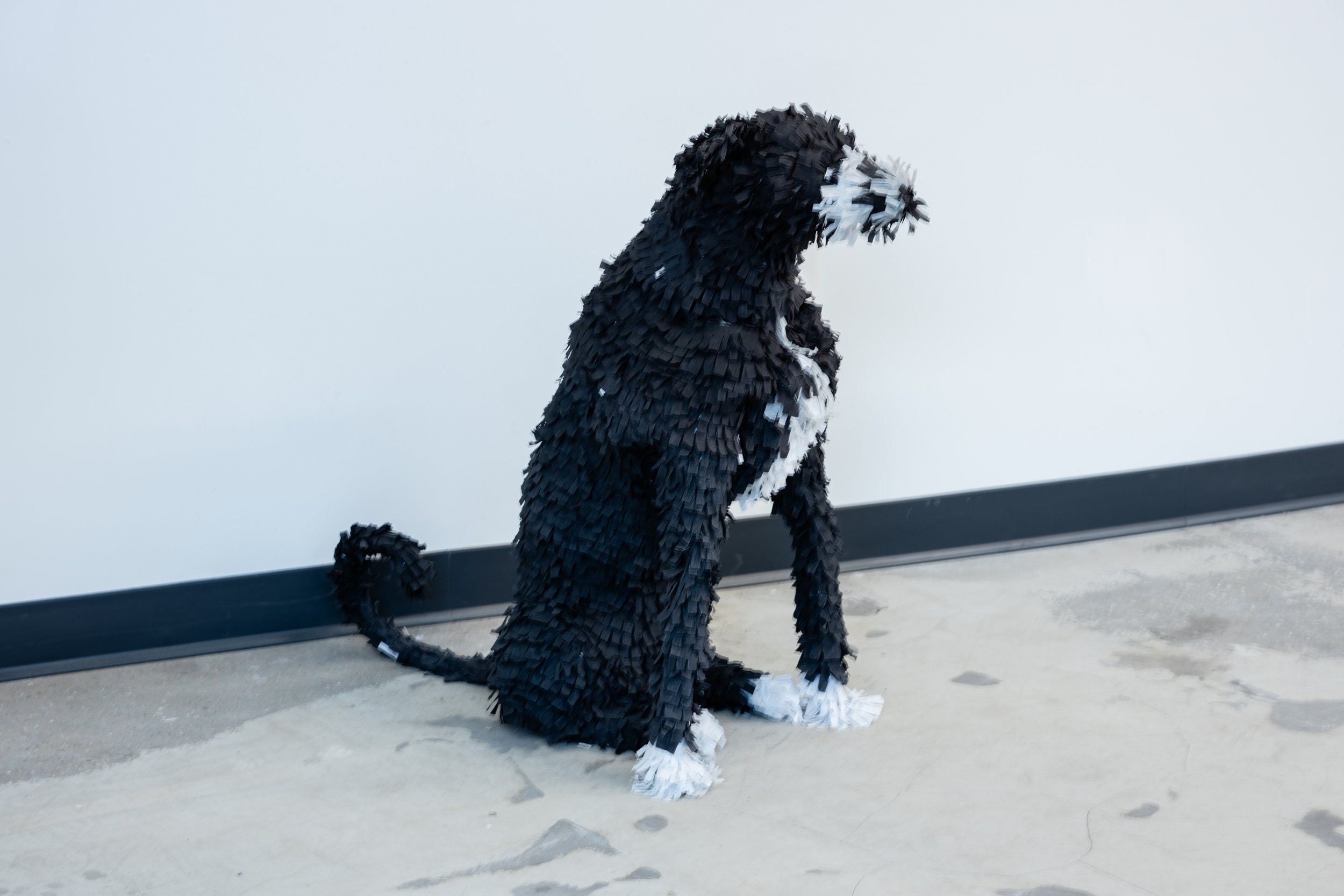
5: Lilo / Technique: Celebration of what is not mine / Year: 2026 / Size: variable
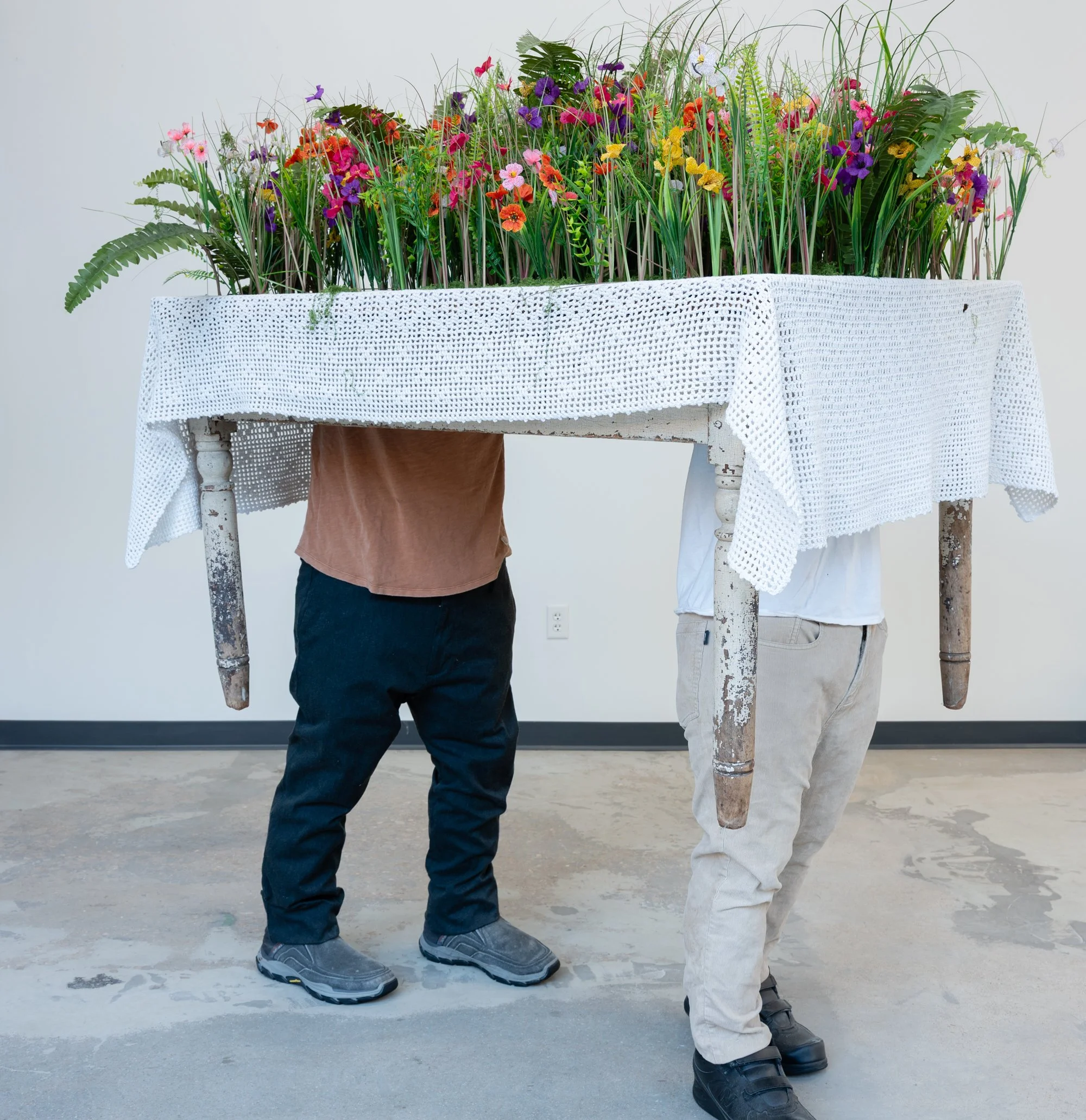
2: Monumento instantáneo / Technique: Hidden garden / Year: 2025 / Size: variable
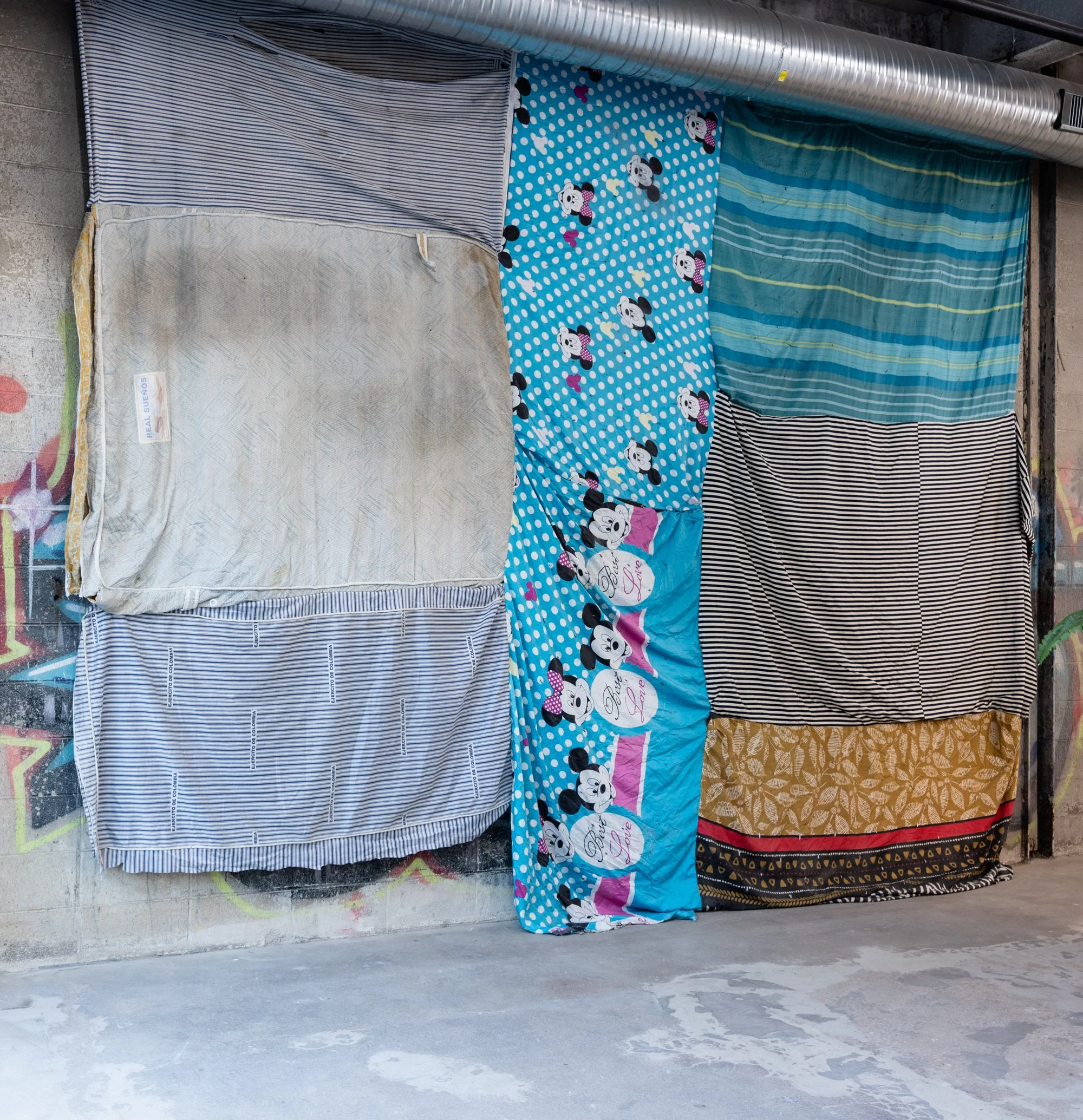
10: Primero es un ruido que produce otro ruido / Technique: Patchwork quilt / Year: 2023
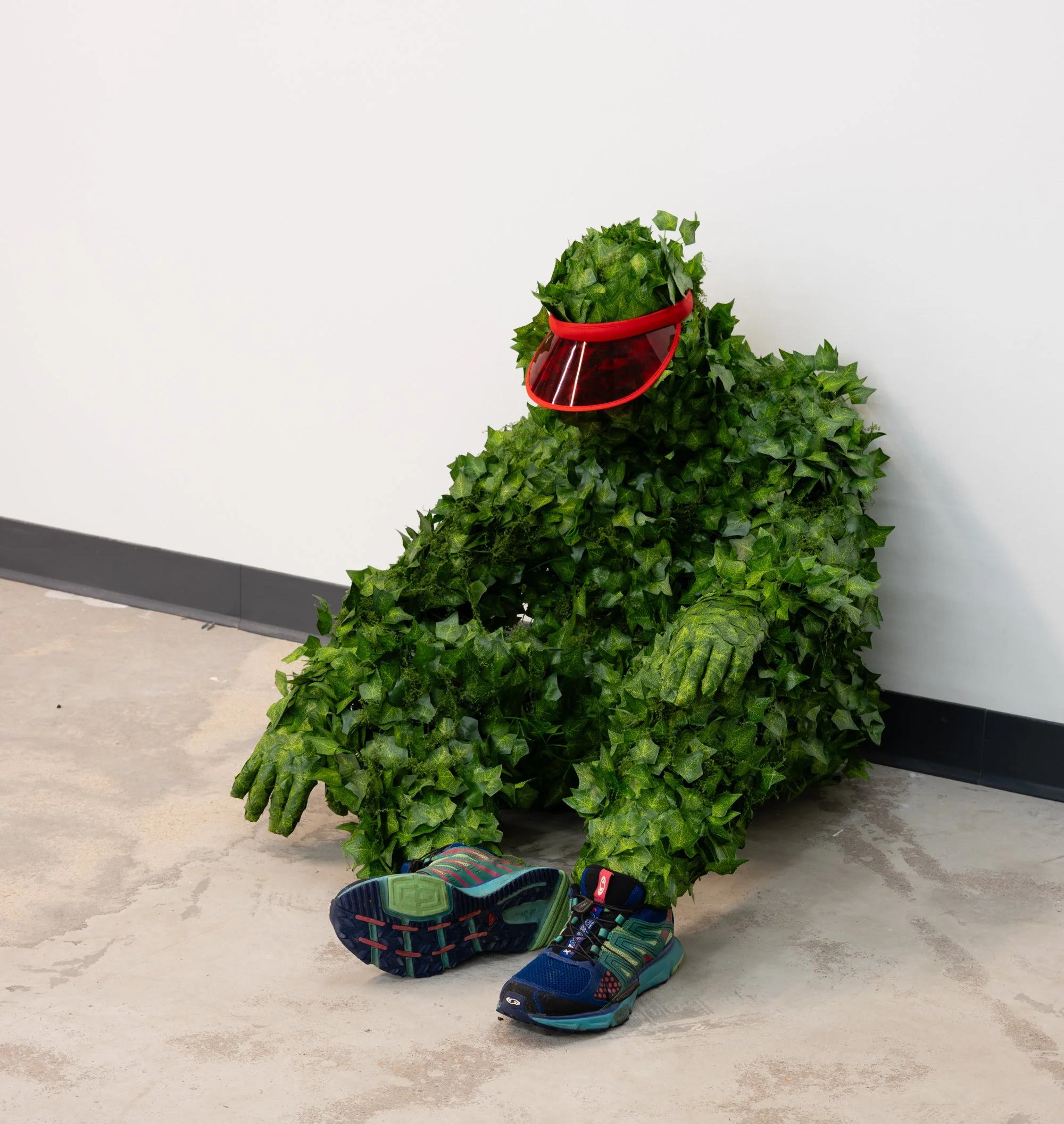
06: la eliminación inmediata e indefinida / Technique: Vine with a translucent cap / Year: 2026
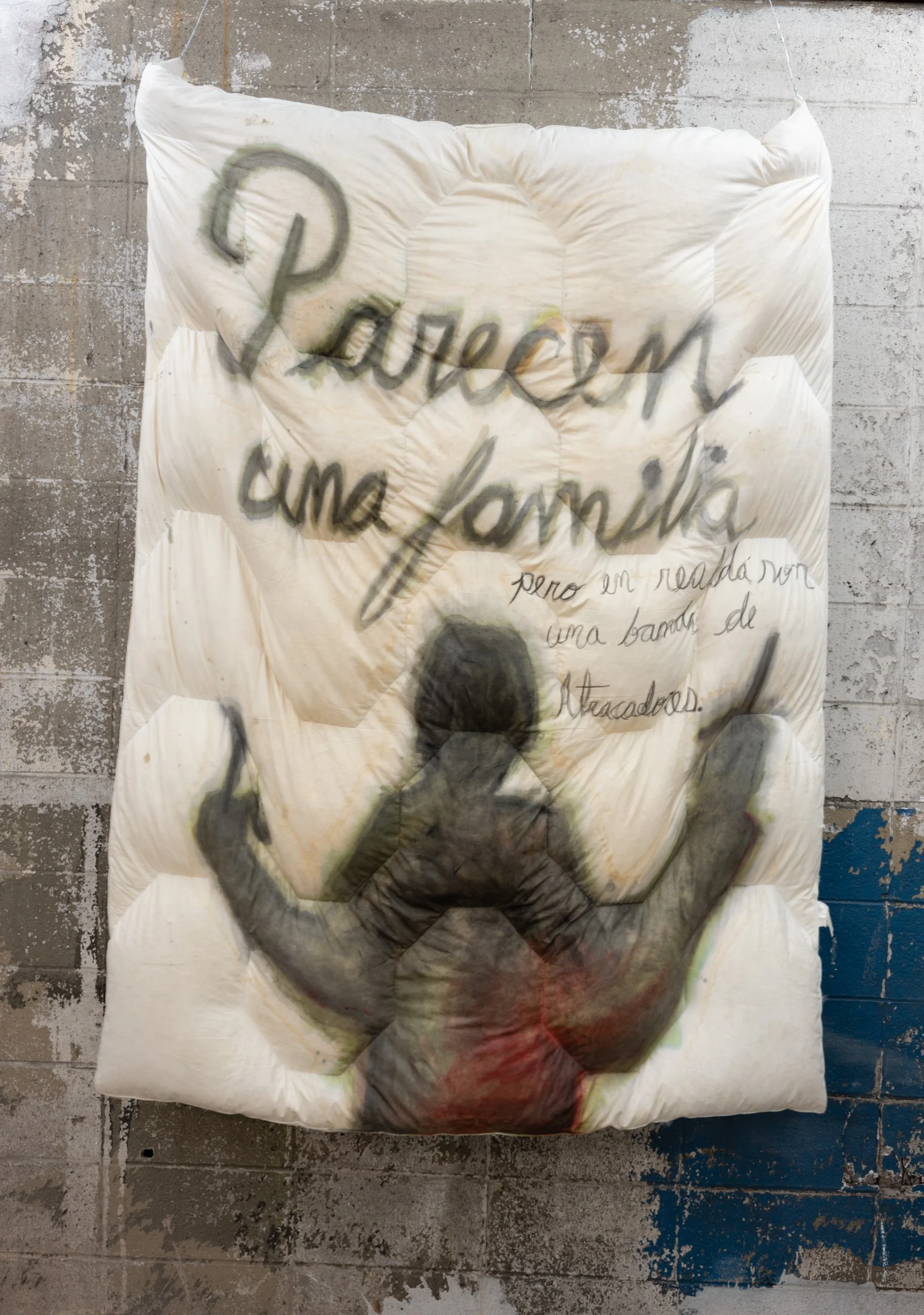
9: Parecen una familia pero en realidá son una banda de atracadores / Technique: Stolen feathers / Year: 2026
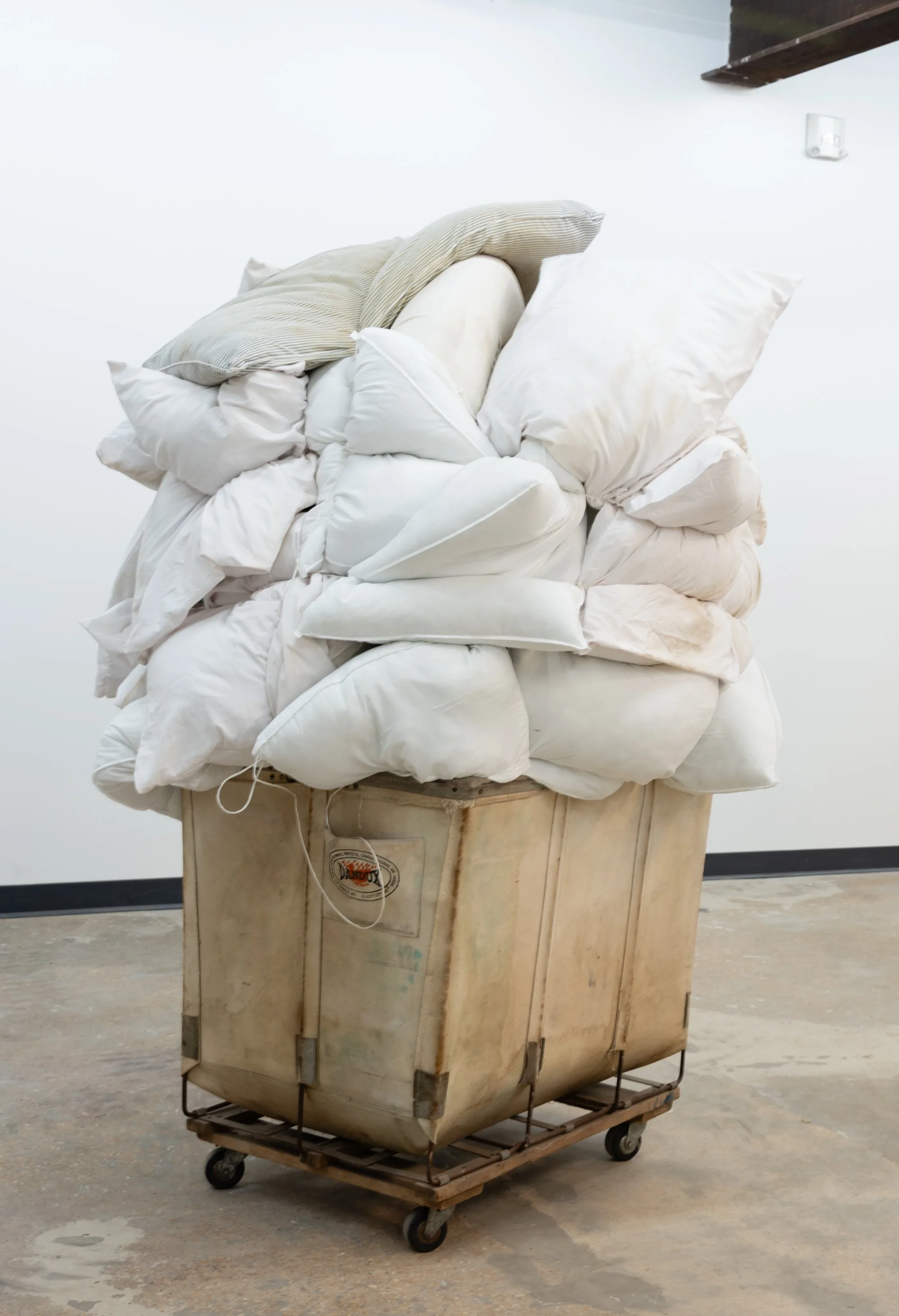
8:Las mil y una noches de la clasificación universal / Technique: Pillows as clouds / Year: 2023
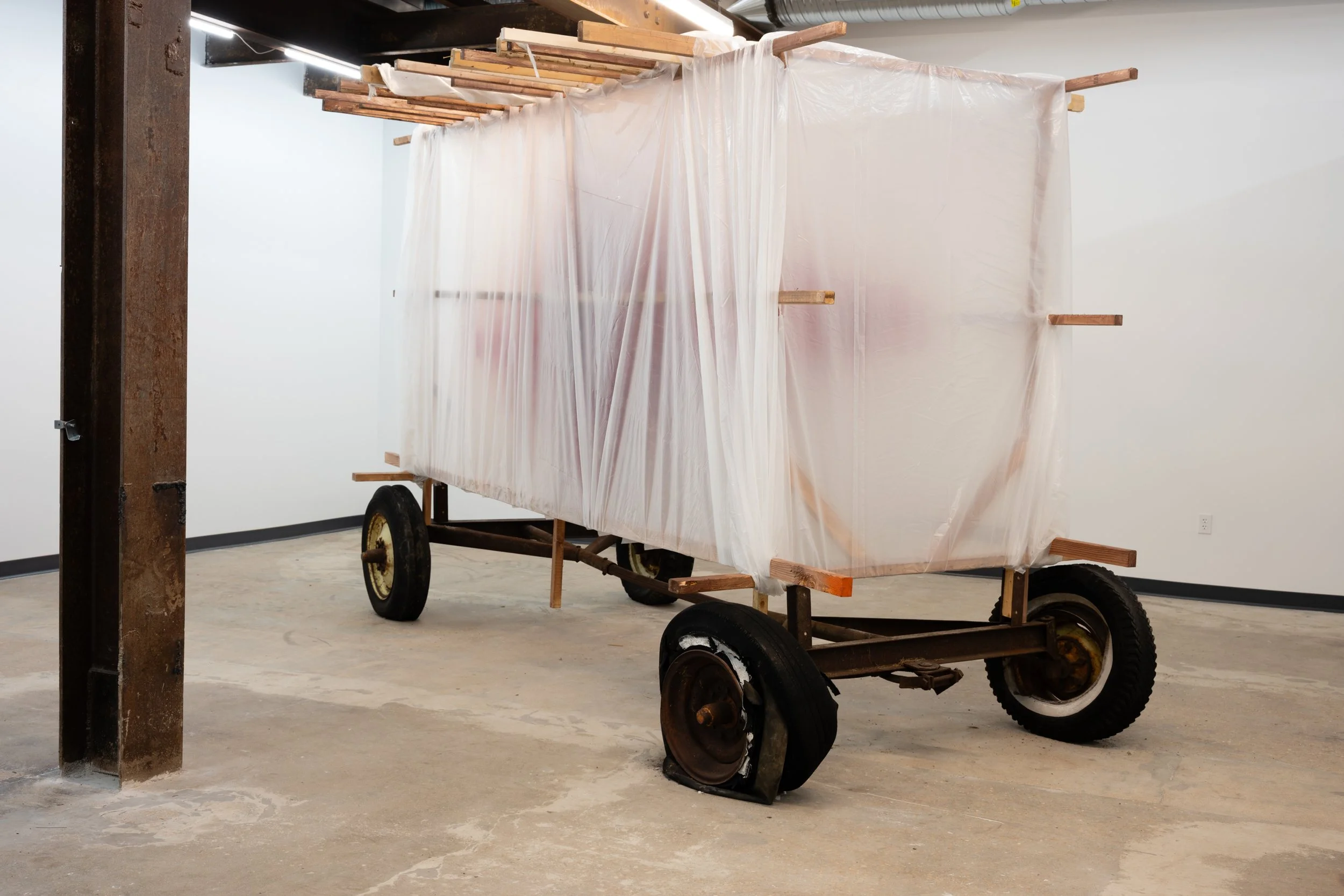
7: Invernadero para una nube diseccionada en 17 / Technique: A stain in a space / Year: 2026